Tuesday, 13 October 2015

Nosheen Iqbal - Femvertising
http://www.theguardian.com/lifeandstyle/2015/oct/12/femvertising-branded-feminism
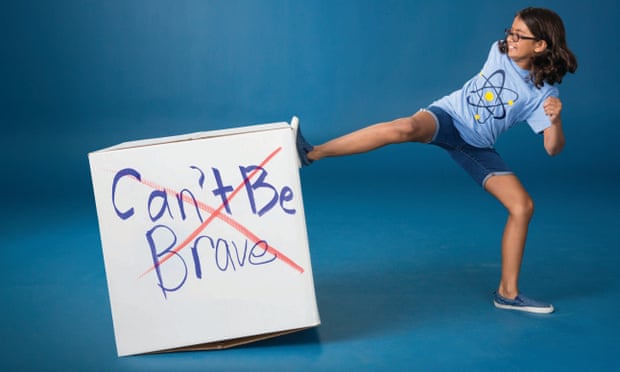
'Hashtag feminism has gone viral, with soap, shampoo and even energy firms launching social-media campaigns marketing feminism. But behind the hype, who’s really benefiting?'
Wednesday, 7 October 2015
Brown and Levinson
The linguists Brown and Levinson put forward some ideas about politeness. The identify what they term positive and negative face needs.
Positive face needs refers to the assumption that we want to be liked and approved of in our dealings with others. As a result of positive face needs we use positive politeness strategies. Brown and Levinson suggested these might include;
-Paying attention
-Seeking agreement (safe topics)
-Pretend agreement (white lies/hedging)
-Use humour
-Use appropriate address terms
-Compliments
Negative face needs refers to the assumption that we deal with difficult conversational situations in a tactful way. As a result of negative face needs, we use negative politeness strategies. Brown and Levinson suggested these might include;
-Being indirect
-Questioning and Hedging
-Being apologetic
-Giving deference (reducing your own status)
AS ELL Spontaneous Speech Test
1. 'A pattern of speech in which one utterance is followed by an appropriate linked
response' - is the definition of which term? Adjacency Pairs.
2. Explain the term 'side sequencing'
The general drift of conversation is sometimes halted at an unpredictable point a request for
clarification and then the conversation picks up again where it left off.
3. Give an example of a tag question
'It's okay here, isn't it?'
4. Give three terms that are examples of non-fluency features
False starts, hesitations and repetition.
5. Explain the term 'phatic language' and give two examples of 'phatic' language
Phatic language is small talk, just talking about everyday things such as; 'Isn't the weather lovely today?'
6. Non-verbal aspects of speech or 'p..........' features such as 'fillers' can help reveal a
speakers attitudes and feelings. Name two other non-verbal aspects of speech.
Paralinguistic features - gestures and facial expressions.
7. 'Elp me orf this orse' is an example of........... spelling which means the spelling of
words to represent how they are pronounced.
Elision.
8. List Grice's Maxims and briefly what each one refers to
Quantity - too much/too little.
Quality - truth.
Relevance - on topic?
Manner - clear communication.
9. Grice was interested in suggesting what helps to create a ........... conversation
Interesting.
10. When analysing spontaneous speech we do not refer to 'sentences' but ............
Utterances.
11. Brown and Levinson put forward some theories about politeness. Name four positive
strategies we might employ if we want to be liked?
Paying attention, seeking agreement, use humour, compliments and use appropriate address terms.
12. In order to analyse a transcript what three things must you establish an awareness of
from the outlet?
Context, the relationship between the speakers and each of there personalities.
Tuesday, 6 October 2015
Awkward Interviews
https://www.youtube.com/watch?v=M29C4dCWyCw
In this interview, the hosts on 'This Morning' interview David Cassidy and it doesn't turn out too well. David Cassidy takes things maybe a little too personally and gets rather defensive. His use of non-fluency features, such as hesitations and false starts, show that he is perhaps un-certain with what they are asking him. His paralinguistic features, such as, pulling a disgusted face and putting his hands up to sort of say 'who cares?', show that he really want happy with the hosts, creating a sense of awkwardness.

In this interview, the hosts on 'This Morning' interview David Cassidy and it doesn't turn out too well. David Cassidy takes things maybe a little too personally and gets rather defensive. His use of non-fluency features, such as hesitations and false starts, show that he is perhaps un-certain with what they are asking him. His paralinguistic features, such as, pulling a disgusted face and putting his hands up to sort of say 'who cares?', show that he really want happy with the hosts, creating a sense of awkwardness.
Friday, 2 October 2015
RSA Animate - Steven Pinker - Language as a Window into Human Nature
https://www.youtube.com/watch?v=3-son3EJTrU
RSA Animate is a youtube channel that will be useful throughout English Language A Level.
In this talk, Steven Pinker shows us how the mind turns the finite building blocks of language into infinite meanings.
RSA Animate is a youtube channel that will be useful throughout English Language A Level.
In this talk, Steven Pinker shows us how the mind turns the finite building blocks of language into infinite meanings.
Subscribe to:
Posts (Atom)